Thursday, March 16, 2023
March is Women's History Month
Wednesday, January 25, 2023
Plan to take your homeschoolers on a fun, free, fact-filled outdoor field trip
Homeschoolers of all ages will love taking a field trip to the Kentucky Faith & Public History Walking Trail in Paris, Kentucky. It is always free and fun. The whole experience happens outdoors so be sure to dress for the weather.
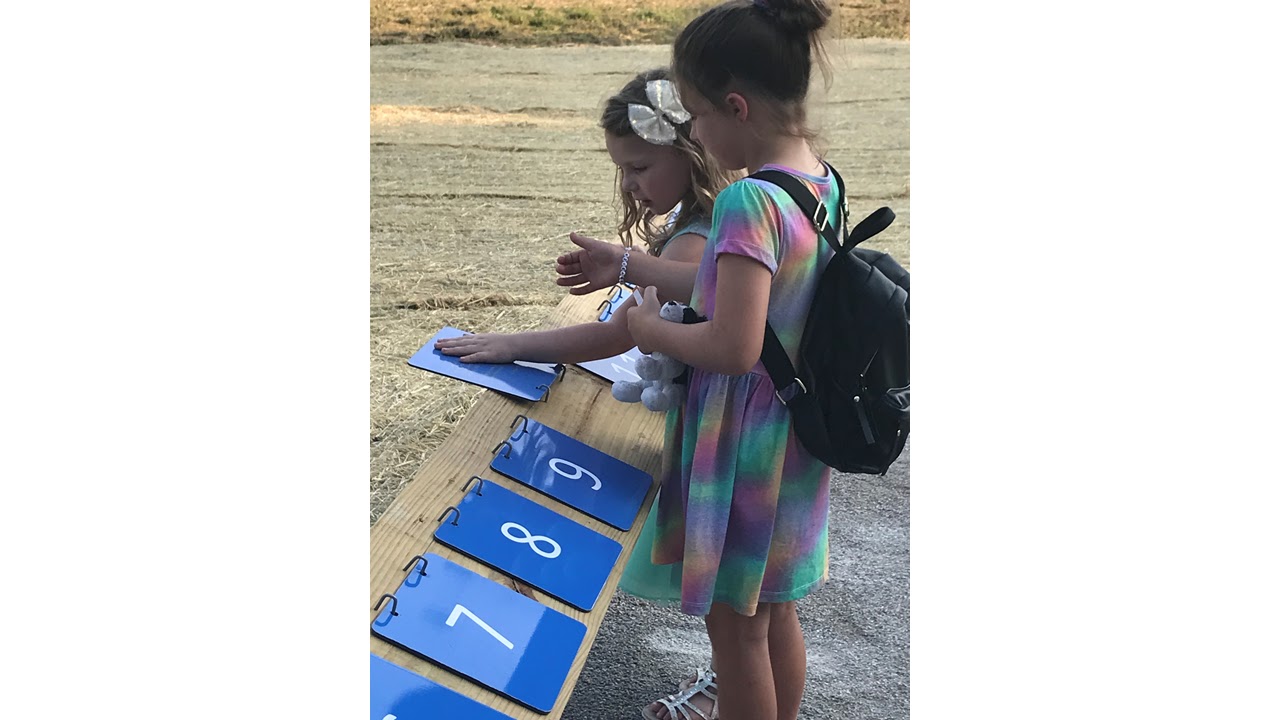
There are seven stations on the half-mile Walking Trail. At each station a large sign with historic images gives facts about the Christian religion and its history, particularly in Kentucky. Each station also contains a clue to the Eye-spy game during which visitors can explore the biography of a famous Kentuckian. In all, there are 30 Kentuckians represented in the game so there is plenty of reason to come often.
The Walking Trail takes you through a large collection of trees in the Greg & Toni & Family Arboretum. Spring blossoms and fall colors are reasons in themselves for a visit. Labels are being produced now so that you can easily identify the trees. Soon we plan to have a nature scavenger hunt ready to add to the fun.
Guided field trips are available when you call to schedule them in advance. They can be customized to focus on particular themes or periods in Kentucky history. These scheduled field trips include a menu of five-minute games inspired by history and by the people featured in the Eye-spy game. A spacious picnic area is on the trail. It seats 80, so pack a picnic lunch and stay as long as you want. The Walking Trail is in an area that is far from enough from the road that small children are safe to run and play while older children engage with the information.
Give us a call at 859-987-5407 to get on the field trip schedule. Or, come anytime for a self-guided experience during daylight hours.
.
Thursday, May 12, 2022
Save the Date for the first Kentucky Christian History Festival & Fundraiser OR ask to schedule a Kentucky Christian history field trip
Make plans now to bring your family to the first ever Kentucky Christian History Festival & Fundraiser in Paris, Kentucky on Saturday, October 1, 2022 beginning at 10AM. Your children will love the Walking Trail with the Eye-Spy game featuring the stories of 30 famous Kentucky Christians. They will have the opportunity to experience thirty five-minute games, crafts, challenges, and activities that each connect to one of these famous Kentucky Christians. There will be vendors, food, and performances for you to enjoy. Admission is free.
This family-focused day will be fun and educational. Homeschoolers can definitely count this as a school field trip and allot the hours to history or social studies.
Homeschoolers are also welcome to schedule a guided field trip to the Walking Trail and to select from a menu of activities from history to do during the experience. Use this online form to let us know that you want to schedule a Kentucky Christian History field trip.
Wednesday, March 16, 2022
Family-friendly guided Walks & Talks about Kentucky's Christian history
Starting Wednesday, April 6, 2022, every Wednesday (April through October) at six o'clock, we will host a Walk & Talk about Kentucky's Christian history . Each adventure will last about 45 minutes. Come to the back of the parking lot outside River of Life Ministries at 616 Clintonville Road, Paris, Kentucky 40361. You will see a "Welcome to the Kentucky Faith & Public History Project Walking Trail" sign next to a sign with a cute little puppy - Dogs are welcome to join us as long as they are leashed and you pick up anything they leave behind. Everyone should be dressed for the weather and wear comfortable walking shoes. We will walk about a half mile. Every Walk & Talk will have a different theme. Additional programs will happen the first Friday and Saturday of the month. These programs are appropriate for people of all ages and are totally free. We are looking forward to seeing you and your family there.
Tuesday, January 11, 2022
Changes and Twists in American Religious Life - a Reflection on a blog by Terry Mattingly from 1/8/22
I follow the Get Religion Blog online. This morning I read a post by Terry Mattingly in which he quoted research that indicates that while 29% of Americans identify as having no religion or spiritual affiliation, 63% of adult Americans affiliate as Christians. That's a more than two-to-one ratio. It sounds good until you read on and discover that in 2007, just 15 years ago, the ratio was five-to-one. Mattingly quotes Rod Dreher that "America continues to transition to its post-Christian reality. ...We in the churches still don't know what to do about it. We have never before faced a crisis like this..." (https://www.getreligion.org/getreligion/2022/1/7/two-think-pieces-on-changes-in-american-religious-life-with-a-few-political-twists?utm_source=GetReligion&utm_campaign=b1b369cc61-RSS+EMAIL+CAMPAIGN&utm_medium=email&utm_term=0_782cfe9a54-b1b369cc61-240924845)
I dispute Dreher's statement that the church has never faced such a crisis based on information we have about the state of the church in late eighteenth century Kentucky. Dr. Robert Davidson, in his History of the Presbyterian Church, wrote the following in 1847: "By the close of the [18th] century, a decided majority of the people were reported to be infidels; and as infidelity is the prolific parent of vice, the whole country was remarkable for lawless vice and dissipation. A melancholy spectacle is presented. We behold infidelity and vice combined rolling their turbid tide over the land; while the Church, which should have been erecting barriers to arrest its progress, is either benumbed by worldliness or wasting her energies in frivolous disputes." (Quoted in "The Great Revival of 1800 First Camp Meeting" by Z.F. Smith in Register of Kentucky State Historical Society, May 1909.)
That was the climate in which the Second Great Awakening emerged, triggered by the camp meeting revivals, such as the most significant one in 1801 at Cane Ridge, not seven miles from our headquarters at the Kentucky Faith & Public History Education Project in Paris, Kentucky.
The following year, Rev. George Baxter's letter to a colleague at the Hampton-Sidney College in Virginia related a sea-change. He wrote: "I think the revival in Kentucky among the most extraordinary that have ever visited the church of Christ; and all things considered, peculiarly adapted to the circumstances of that country... Something of an extraordinary nature seemed necessary to arrest the attention of a giddy people who were ready to conclude that Christianity was a fable and futurity a dream. This revival has undone it; it has confounded infidelity, awed vice into silence, and brought numbers beyond calculation under serious impressions." (First published in the Methodist Magazine of London in February 1803. Quoted in Charles A. Johnson. The Frontier Camp Meeting: Religion's Harvest Time. Southern Methodist University Press. 1955, 1985.)
Other notable revivals were also preceded by such a "crisis" of "infidelity" and "vice". Perhaps the current "crisis" should be viewed as a red sky in the morning presaging a spiritual whirlwind that will upend and reshuffle everyone in its path with another great awakening to the urgency of our spiritual condition, impacting and redirecting a nation once again.
By Lesley Barker PhD, Director of the Kentucky Faith & Public History Education Project. The project creates educational resources about the Christian history of Kentucky.
Wednesday, December 1, 2021
A Dot-to-Dot book about Kentucky and famous people from Kentucky (It makes a great stocking stuffer)
We were at a holiday craft show recently. We were selling the Famous Kentucky Christians Club books now that there are eight titles in the season. We had them wrapped nicely in sets - all the books about women in a set; all the books about men in a set. People could also purchase individual books. We sold a bunch for Christmas gifts. However, many grandparents came to our booth hoping to find something for their grandchildren who are not yet old enough to read. What did we have to offer these younger, primary grade children?
As of today, we are pleased to announce that the project has published its first activity book, The Kentucky Dot-to-Dot Book, by Lesley Barker. A short paragraph introduces each dot-to-dot puzzle which can be enjoyed even without reading the text. Solve the puzzle and color the picture. The book gives great introductory facts about Kentucky history. It also introduces some famous Kentuckians who happened to be public about their Christian faith. The book makes a perfect stocking stuffer for kids of any age.
You can purchase your Kentucky Dot-to-Dot Book online here.
You can also buy the easy-reader chapter books in the Famous Kentucky Christians Club series online here. They are high-interest books written at a second to fourth grade reading level and are appropriate for students through middle school and beyond.
Wednesday, October 27, 2021
Teaching History Teaches Critical Thinking Skills
Teaching history is about much more than introducing students to names, dates, places and past events. History explores how people and cultures interacted in the past with all the clashes and sometimes messy complications that produced new ideas and adventures. Teaching history well develops critical thinkers especially if the students are trained to be intentional inquirers. The Kentucky State Curriculum Standards for Social Studies include a four-step "inquiry process" which is similar to the "scientific method" taught in the hard sciences. Home schooling parents can benefit from this approach as well.
The four steps are:
- Ask important questions - the students should be assisted to develop their own questions to inform their reading and research
- Hunt for facts - the students should be introduced to good research techniques such as internet search protocols, library skills, oral history methods and field observation
- Show proof- the students should become practiced in documenting their sources and giving credit for the ideas they advance
- Share what you learn - the students should gain experience communicating what they discover using written, oral, artistic and performance mediums
Wednesday, September 29, 2021
What do your students want to do when they grow up?
The Kentucky Faith and Public History Education Project has a list of famous Kentucky Christians on our website at https://kentuckyfaithandpublichistory.org/famous-kentucky-christians/. The list names a person, gives a brief statement for which they are famous, and a link to more information available online. It is a preliminary list of people. We're adding to it continually. It is a wonderful resource for homeschool history projects. It is a treasure trove of inspiration that homeschoolers can find to be aspirational. A very important objective of this directory of famous Kentucky Christians is to illustrate that the Christian message does not divide peoples' purposes or value into clergy and laity where one calling is more to be regarded than another. Jennie C. Benedict's life is such an example.
Jennie C. Benedict was an entrepreneur living in Louisville in 1884. She was in search of a project for which she had both passion and skill. Her process started with faith. She expressed how faith triggered her search with these words:
"Feeling a desire to prove what a woman can do in the business world without capital, and being confronted with the necessity of falling into rank in the marts of trade, I began,... to examine myself for the purpose of ascertaining whether or not I possessed a God-given talent; and if so, what it was..." (The 1893 Blue Ribbon Cookbook p. 12).
Eleven years later she quoted this poem in the preface for the book (p.16):
"It is not the branch of work alone that lifts to a higher sphere,
For man may choose the humblest part, to find the great is near.
God gives us all our part to do, and with our life the right
To leave our path unbeautified, or mighty in His sight."
Benedict went on to write several cookbooks, some articles and a memoir. She lived from 1860-1928. She was from Louisville. Her recipe for cucumber sandwiches, Benedictines, remains a staple at Kentucky Derby parties.
What do your students want to do with their lives? Is there a person on the famous Kentucky Christians list that matches what they want to do?
Citations
Benedict, Jennie C. The Blue Ribbon Cookbook. 1893. ONLINE at archive.org/details/blueribboncookbo00bene/page/12/mode/2up. ACCESSED 9/29/2021.
Reber, Patricia Bixler. Researching Food History Cooking and Dining. 2016. ONLINE at researchingfoodhistory.blogspot.com/2019/04/advice-from-creator-of-kentucky-derby.html. ACCESSED 9/29/2021.
Wednesday, September 8, 2021
Difficult Issues (Like Slavery) that Complicate Teaching and Learning about Famous Kentucky Christians
Wednesday, May 5, 2021
The Power of Place - Encouraging Homeschoolers to Explore Place-Based Education
When I was the executive director of the Bolduc House Museum
in Sainte Genevieve, Missouri, I often introduced fourth grade classes to the
National Historic Landmark house built in 1792 in Missouri’s first town this
way. The class would be gathered on the front porch of the house, behind the
massive stockade fence. “Put your hands on these huge square oak logs,” I
instructed. “Then think: these logs were put here when George Washington was
the president of the United States.” Many children ooed and awed at the
connection they were experiencing. They all knew about George Washington. They
had read about him in text books and seen his picture on a dollar bill. They
knew he was our country’s first president and that he lived long before even
their great-grandparents had been born. Touching the logs made him more
accessible, more real. Then, I would insert a riddle. “But George Washington
was never the president of Sainte Genevieve,” I would tease. “Huh?” the
students responded, puzzled. That riddle introduced the story of that French
colonial American site – Thomas Jefferson was the president when Missouri and
the rest of the territory included in the Louisiana Purchase was added to the
nation.
This shows the power of place-based learning.
For homeschoolers, place-based learning is easy. It appeals
to people of all ages – high school students can be encouraged to do some independent
explorations or interviews while younger students can be engaged in planned
activities. Even the preschoolers in the family tend to enjoy the sights,
sounds and smells of new places. Students can be included in planning trips,
using calendars and budgets, figuring out how to raise the money to pay for the
adventure. This introduces internet skills, math skills and communication
skills. Trips can be to museums, historic sites, natural history areas, government
buildings, or even to visit an expert or to meet someone who can share their
life experience and skills. Trips can focus on art, architecture, technology,
history, science, religion and more. Writing or creative assignments following place-based
learning adventures helps solidify what was learned as well as to take stock of
what new questions may have arisen because of the experience.
In Kentucky, there are several places that merit a visit by
homeschoolers who are interested in exploring the Christian history of the
commonwealth. Visit where the first of the early nineteenth century revivals happened that triggered the Second Great Awakening in America at the Cane Ridge Shrine
in Bourbon County, the Red River Meeting House in Logan County, and the Old
Mulkey Meeting House in Monroe County. Follow the tour of “The Kentucky Holy
Land” in Nelson, Washington and Marion Counties for a great introduction to our
Catholic history. Research where the historic African American churches are in
Kentucky and visit the many architecturally significant churches in Louisville.
Go to the Creation Museum in Boone County and the Ark Encounter in Williamstown,
Kentucky.
Our Kentucky Faith & Public History Walking Trail in
Paris, Kentucky, will be open to the public soon. This will be a self-guided
walk with information about the Christian history of Kentucky including an
interactive eye-spy game that students can play to learn about some famous
Kentucky Christians.
We’d love to post short student-written reviews along with
original drawings and photographs of their visits to places that connect to our
Christian history here. To submit your child’s work, email me at kyfaithpublichistory@gmail.com.
© Lesley Barker, PhD – Director, Kentucky Faith & Public
History Education Project
Tuesday, March 23, 2021
First Lessons in Entrepreneurship for Homeschoolers through the Life of Harry Clark Karsner
Many of Kentucky’s famous Christians were entrepreneurs and
innovators. This means that they were the first to recognized opportunities for breaking new ground in their field. They also had the persistence to develop the
resources and to involve a network of collaborators that could make their ideas
manifest outside of their own heads and imaginations. The ability to recognize
entrepreneurial opportunities and then to take action to bring the ideas into
being is the core definition of entrepreneurial competence and ability[1].
The goal of entrepreneurship education is to “foster creative skills that can
be applied in practices, education and environments supporting innovation”[2].
The most important skill for an entrepreneur is the ability to recognize new
opportunities for innovation. By exposing your students to the stories of past
entrepreneurs, you can introduce them to this skill. Take the story of Harry
Clark Karsner as an example. Share it with your students. Then ask them to
think and discuss how Karsner first saw new opportunities and, subsequently, took
advantage of them.
Harry Clark Karsner
grew up on a farm in Owen County, Kentucky. He graduated from high school in
the early 1930’s. He did something very few people had done at that time. He
took flying lessons. He loved flying. He became a flight instructor. During
World War Two, he taught military pilots. After the war, he turned part of his
farm into an airfield. He continued teaching people to fly. He also decided to
use his plane to share the Christian message from the sky. He had to figure out how to build a way to broadcast sermons and songs from his plane.
He had to collaborate with a preacher and a singer. Many afternoons, in good
weather, he flew his plane over southern Ohio and northern Kentucky. People on
the ground reported hearing the message and responding to God because of it.
Karsner mounted a giant neon sign on the side of his hangar so that it was
visible from Highway 127. It said, “Christ is the Answer”. The hangar has been
torn down, but the sign has been preserved along with a historic marker that
tells Karsner’s story. He went on to become the Kentucky Aeronautics
Commissioner. He also served on the Owen County school board.
Entrepreneurship education begins with observation. Your student is being an observer by noticing and discussing how Karsner displayed the traits of an entrepreneur and an innovator. It progresses “from observation to participation”[3]. You can assist your students to move towards participation in entrepreneurship by extending the discussion of Harry Karsner and making it personal. Use a Venn Diagram (see https://www.theschoolrun.com/what-venn-diagram). Draw two intersecting circles. Label one circle “Harry Karsner”. Label the other circle with your student’s name. Fill in the circle for Karsner with the ways he saw and took advantage of opportunities to do things that most people had never even thought of doing. In the circle with your student’s name, write how they have done creative things that came from their own imagination or thoughts. In the space where the two circles intersect, write a list of qualities the student shares with Karsner. Then, challenge your student to act on an idea they have. It may mean they need to earn some money to buy needed materials. It may mean they need to do research online. They may need to involve other people as advisors or helpers.
This is an activity that can be repeated whenever your
curriculum involves an innovative entrepreneur. It will build your student’s
ability to recognize entrepreneurial opportunities. It will help them to
develop the skills and disciplines needed to respond creatively when an entrepreneurial opportunity occurs. Perhaps it will lead them to the passion and purpose for which they have
been born.
© 2021 By Lesley Barker
Tuesday, March 2, 2021
How well are we doing introducing homeschooled students to objectivity, bias, inclusion and the analysis of competing truth claims?
Objectivity, bias, inclusion, and truth claims are important
concepts whenever we study history. Often, we feel so strongly about our own
positions that we fail to investigate alternative claims and evidence.
Sometimes we swear that what we have always been told is the absolute truth and
the only way to think about an issue or event. Decisions can be made based on
the force of an argument without necessarily probing the root ideas upon which the argument was founded. As King Solomon said, “God requires an account of the
past”[1].
An investigation is warranted before we die on the sword of an opinion that we refuse
to nuance or debate.
Mark K. George, professor of religion at the Iliff School of
Theology, wrote about how the Bible models an approach to recording history
that includes both sides, that shows the flaws of the heroes, and that does not
shy away from controversy[2].
Here at the Kentucky Faith and Public History Project, we have committed to
objectivity when we discuss the Christian history of Kentucky. We are involved
in rigorous historic research. Our bias is that we are faith-based and
unapologetically Christian, but we refuse to be dishonest or disingenuous when dealing
with historical, cultural, and individual failures and atrocities perpetrated
in the name of the church or of God.
George’s article provides a good analysis of how the
American story is being treated as a tug of war between our flaws and our triumphs.
The question is whether we are willing to undergo the rigorous scrutiny of our
past that is necessary to sift the truth from hyperbolic wanna-be-renditions.
For homeschooling parents it is especially important to introduce students to
multiple points of view, to historic archival research methods, and to the Socratic
debate that can elicit enough information about each perspective for them to
respectfully present, defend and critique the arguments. How well are we each
doing?
©2021 By Lesley Barker PhD
[1]
Ecclesiastes 3:15. The Holy Bible, New King James Version.
[2]
Mark K. George. “What the Bible’s Approach to History Can Teach Us About
America’s Glory and Shame”. The Conversation. 2021. ONLINE at https://theconversation.com/what-the-bibles-approach-to-history-can-teach-us-about-americas-glory-and-shame-151394
ACCESSED 3/2/2021.
Tuesday, February 16, 2021
Making Paint from Petals - A Homeschool Lesson Inspired By the Life of Helen LaFrance
Do you have paint and paper at your house so that if your
students wanted to paint a picture they could just go to the cupboard, get the
supplies and get started? When the folk-artist, Helen LaFrance, was a little
girl she did not have this luxury available but it did not stop her from
developing her gift.
Helen LaFrance is a famous Kentucky Christian who only
finished the fifth grade. She grew up on her parents’ farm in Graves County and
went on to become a significant folk artist whose paintings are about Kentucky farm life,
African American country churches and illustrations based on biblical stories
and imagery. Her paintings can be seen in museums and in private collections
including Oprah Winfrey’s. Helen LaFrance lived for 101 years, 1919-2020. Helen’s
mother showed her how to make paints using berries, flowers and bluing. The
first picture she painted was a rabbit. For paper, she used an old piece of
wallpaper.[1]
Homeschoolers can easily make their own watercolors from
flowers. The project can become the inspiration for lessons in botany,
chemistry and art. It provides an opportunity to introduce the scientific
method to elementary and middle school students because this always begins with
the formation of a hypothesis. Here is a basic lesson plan along with the time
you should allot and can count for your students to complete each task.
- Send the students to pick some flowers. (15-60 minutes)
- Use botanical guides to help the students identify the flowers. Press one of each type of flower between pieces of wax paper – cover the wax paper/flower sandwich with a cotton towel and use a hot iron to press and seal the flower. Mount the flower on a poster board or in an album and label it neatly. Draw a small rectangle next to the flower to be used with paint made from its petals (60 minutes)
- Ask the students what color paint they think each flower will produce. This is the hypothesis, a big word for guess. Write down what they predict. (15 minutes)
- Test the hypothesis. Use a glass bowl for each type of flower. Put the petals in the bowl. Mash them. Boil water and cover the petals with two or three inches of boiling water. Allow the petals to steep, like tea, for an hour or even overnight. Strain the liquid and discard the petals. The liquid is the paint. (60 minutes plus time to steep)
- Add challenges for older students. Older students can be asked to predict what happens to the pigment when the steeping time changes. They may be asked to come up with additives like salt or vinegar or bluing liquid, for example to enhance the pigment. Older students can keep a log of their trials and results. (1 to 2 hours)
- Paint each rectangle with the pigment that came from the flower. (30 minutes)
- Return to the original hypotheses. Ask the students to remember their predictions and to evaluate or judge how close they came to being right. (10 minutes)
- Use the paints to make a picture. (30-60 minutes)
- Write a summary of what they did from going to pick the flowers to painting their picture- for students grades 1-4 assign them to write one sentence per grade. For 5-8th grade students, assign a maximum of five paragraphs. Revise and edit the summary until there is a final draft that is ready to be turned in. (30-60 minutes)
- Share the summary, the poster and the painting with another student or relative. (10 minutes)
B
[1] https://kchr.ky.gov/Hall-of-Fame/Pages/Helen-LaFrance.aspx
Friday, February 5, 2021
Say His (or Her) Name
What would you think if no one ever called you by name? This is what happened to Peter and Dinah Durrett. They were famous Kentucky Christians who arrived in the Lexington area in 1781 with a group of nearly 500 people known as the Traveling Church. The Durretts were enslaved African Americans owned by one of the Baptist pastors, Joseph Craig. In most of the books and other documents written about the Traveling Church, the pastors are always named as are some of the other leaders. Very occasionally, Peter Durrett is named. Usually he is called “Uncle Peter” or “Old Captain”. One of the best accounts of the Traveling Church talks about Peter Durrett but it never calls him anything but “Captain”. His wife is not named at all[1]. However, had it not been for Dinah Durrett, Peter might never have moved to Kentucky.
It was not because Peter and Dinah Durrett were unimportant that their names were not recorded. Peter Durrett was the first African American man to preach a sermon in Kentucky. He and Dinah started the first African American church in Kentucky. Peter was one of the scouts who prepared the way and led the Traveling Church over the mountains from Virginia. Do you think it could be that the fact that Peter and Dinah were enslaved that kept historians from naming them? Peter even had a white father, his former master.
Dinah’s likelihood of being named was even less than Peter’s. She was an enslaved African American and she was a woman. Not naming people makes doing historical research very difficult. We need names to search for individuals in plantation records, municipal and county records, and census records. We need names to connect parents to their children and grandchildren and to find marriage and death certificates or records of military service.
Naming people continues to be a way for
justice to be served. Think about the contemporary cries for racial justice
such as the protest call to “Say his (or her) name” after the death of George Floyd or Brianna Taylor, for example. As we at the Kentucky
Faith & Public History Education Project continue to research the Christian
men and women whose public affiliation as Christians made them succeed, we are
committed to find and call them by name. We won’t be content to speak in generalities or to
use pejorative nicknames or to call people by their roles. We will say their names
and we will do our best to find verifiable information about their lives. That will bring recognition to previously lost or marginalized stories as well as honor for their memory.
©2021 By Lesley Barker PhD
Thursday, January 28, 2021
How Tony Snow's Life Poses a Question About the Relevancy of Faith
At the Kentucky Faith & Public History Education Project,
when we identify a Kentuckian whose public statements indicate that he or she
was intentional about their Christian faith, we attempt to pinpoint how and
when this commitment started. We look for evidence that the person stitched
their faith into every aspect of their life, both personal and professional. We
search for what Christians may call their “testimony”. Our hope is to
demonstrate how Christianity is embraced and walked out in the normal everyday
lives of its adherents. Unfortunately, this search for public proclamations of past
Kentuckians’ Christian faith is quite difficult.
Take what we can find about Tony Snow, for example.
Tony Snow was born in Berea, Kentucky. He became a prominent
journalist on radio, a television anchor, a syndicated writer, a speech writer
for the first President Bush and the press secretary for the second President
Bush. He was not shy about writing or speaking about his faith, especially
after he was faced with the cancer that took his life in 2008 when he was just
53 years old. He wrote an essay about the blessings of cancer for Christianity
Today in 2007 in which he said:
“I
don’t know why I have cancer, and I don’t much care…Our maladies define a
central feature of our existence: We are fallen. We are imperfect. Our bodies
give out. But despite this – because of it-God offers the possibility of
salvation and grace. We don’t know how the narrative of our lives will end, but
we get to choose how to use the interval between now and the moment we meet our
Creator face to face.”[1]
Snow wrote many articles for The Jewish World Review
in which he was explicit about his faith. In 2005 he wrote this: “the last
few months — my time of surgery and chemo — have been the happiest and most
thrilling of my life. They have confirmed lessons that seem at once too good to
be true, and too important and vital not to be. Here is a short inventory:
Faith matters. Prayers heal. Love overcomes.”[2]
However, after his death, few of the many eulogies celebrated
his faith. Mollie Hemingway wrote: “While
the New York Times and the Washington Post found room to include
Snow’s salary at his White House job, neither of them mentioned his strong
religious views that were so integral to his outlook on life”[3].
The conclusion of her article notes that: “Considering all of the
material that could be drawn on, it is somewhat surprising that most major
coverage failed to mention Snow’s Christian faith”[4].
Perhaps what CNN journalist William Schneider said is true and “The press…
just doesn’t get religion.”[5]
Perhaps it would be more accurate to
think that the press mostly does not see the relevancy of religion. Some do. One
journalist, Bill Kristol, posed his own question as he thought about his
decades-long friendship with Tony Snow. “Watching him, and so admiring his
remarkable strength of character in the last phase of his life, I came to
wonder: Could it be that a stance of faith-grounded optimism is in fact
superior to one of worldly pessimism or sophisticated fatalism?”[6]
Our project and its purpose is to show that religion, and
specifically how the Christian religion is, for its practitioners, as Bill
Kristol surmised, a superior grounding both for living and for dying. Hence, we
bring Tony Snow’s faith forward as an example of Kentucky’s parade of
Christians whose lives and contributions were enabled and strengthened because
of the centrality of their religion. For us, it speaks to an essential question of relevancy.
©2021 By Lesley Barker, PhD
[1]
Tony Snow. ”Cancer’s Unexpected Blessings” in Christianity Today.
July 20, 2007.
[2]
Tony Snow. “Counting Our Blessings and Passing Them On” in The Jewish
World Review. Sept. 16, 2005. ONLINE at www.jewishworldreview.com/tony/snow091605.php3
. ACCESSED March 12, 2020.
[3]
Mollie Hemingway. Tony Snow, Catholic, Dead at 53. ONLINE at https://www.catholiceducaton.org/en/faith-and-character/faith-and-character/tony-snow-catholic-dead-at-53.html.
ACCESSED Jan. 28, 2021.
[4] Ibid.
[5]
Get Religion.org/contact. ACCESSED Jan. 28, 2021.
[6]
William Kristol. The Character of Optimism. The New York Times. July 14, 2008.
ONLINE at https://www.nytimes.com/2008/07/14/opinion/14kristol.html?hp
ACCESSED Jan. 28, 2021.
Thursday, January 21, 2021
Opportunities in History for Homeschoolers
Since 1974, a research opportunity and competition for
middle school and high school students who love history has existed. It is the
National History Day. The rules and the theme for the competition are announced
each June. The projects are judged in regional competitions in early spring
with the winners competing nationally later. The Kentucky Historical Society
facilitates the National History Day in Kentucky which is hosted online here: https://history.ky.gov/for-educators/national-history-day/.
This competition is rigorous. The participants produce
original research. There are several different formats in which they can
present the research.
The Kentucky Faith & Public History Education Project encourages
homeschoolers to get involved with this opportunity. Follow the competition
this year so you will be motivated and informed about how to get started on the
2021-2 competition when it is announced in June.
Thursday, January 14, 2021
A Homeschool Lesson about Washington DC's Buildings and Monuments Inspired by a Letter by a Famous Kentucky Christian
This is a homeschool lesson plan that is appropriate for
students in middle school or high school.
Introduction
Explain that this lesson is inspired by something that Mary
Rhodes, a famous Kentucky Christian, wrote about Washington, DC. She was one of
three women who became the founding nuns of the Sisters of Loretto Roman
Catholic Order, headquartered in Nerinx, Kentucky. This first American order of Catholic nuns was
established in Kentucky in 1812. Rhodes grew up in the vicinity of Washington
DC before she moved to Kentucky. Years later in 1851, she wrote to her nephew
about how beautiful the buildings and monuments of our capitol must be. She
also used that idea to connect to her faith. She wrote:
“I can readily conceive that the creation of
those edifices, and various other improvements have greatly contributed to the
beauty and magnificence of that immortal city – but what immortal did I say?
Alas! To truly does the tiny smitten flower as well as the crash and fall of
empires tell us, that all things on earth must pass away! Absurd and
inapplicable then the word, to ought else below, than to the undying Spirit,
breathed by the Omnipotent into this our poor tenement of clay…”[1]
Vocabulary & Reading Comprehension
This passage contains many words that homeschoolers may find
unfamiliar. Before they can truly understand what the writer is saying, they
should use a dictionary to define them: conceive, edifices, immortal, smitten,
absurd, inapplicable, omnipotent, tenement. Then, using what they have learned,
students can be encouraged to rewrite the passage using their own words. This
will tell you whether they truly comprehend it. Then ask the students to
discuss whether they agree with what Mary Rhodes wrote.
History and Geography
Download the map that Pierre L’Enfant drew in 1791 to
illustrate the plan of Washington, DC from the Library of Congress website[2].
Then download the National Park Service’s map of the monuments in the city
today[3].
Compare and contrast the two maps. Discuss what the students would like to
visit if they had the opportunity to visit the nation’s capital. Ask the
students to use the maps to give directions from the White House to one of the
monuments or other famous buildings. Require them to use the words, “North,
South, East and West”.
Research and Writing
Ask your students to select a monument to learn more about.
Then help them devise a research plan using the internet or the library. Assign
them to write an essay about the monument. Make sure they cite their work. This
is a great time to teach about how to use and write footnotes.
Art Extension
Ask the students to draw a poster or make a 3-D model of the
monument they researched.
By Lesley Barker ©2021
Thursday, January 7, 2021
A Homeschool Lesson about the Tenth President of Liberia - Alfred Francis Russell (a Kentucky Christian)
This homeschool lesson about Liberia and its tenth president
(who was from Kentucky) can be adapted for use by students in the fourth grade
and above. It includes map skills, computer and internet skills, math, history
and writing. Use some or all of the suggestions. The activities can be spread
over several lessons.
Introduce the lesson with a brief biography of Alfred Francis Russell
(bill hours to history)
From Wikipedia: Alfred Francis Russell
Alfred Francis Russell was born in Lexington, Kentucky, in
1817 where he and his mother were slaves. His father, a white man, was the son
of Russell’s owner. When Russell was sixteen, in 1833, his mistress (who was
his grandmother) emancipated him and paid for him to join 200 other freed
slaves to move to Liberia, Africa. There, he became a Methodist minister and
later, an Episcopalian priest. He farmed sugarcane and coffee. He became active
in politics, was elected senator and then vice president of the country. When
the elected president resigned, Russell became the tenth president of Liberia.
He served for one year.
Pose some questions to evaluate how much knowledge the students already
have
Where is Liberia?
Guess how far you think it is from Lexington, Kentucky is Liberia and, in 1833,
how would someone get there.
In the United States, the president must have been born
here. Russell was not born in Liberia yet he became its president. How was that
possible?
Show where Liberia is on the globe and follow up by assigning some
activities using maps (bill hours to geography or map skills)
Download and print an outline map of Africa with the names
of today’s countries. A good one is located at http://www.georgethegeographer.co.uk/Base_maps/PDFs/Africa_b&w_named.pdf.
Direct the students to find Liberia and to color it in. Have them label the Atlantic
Ocean and the Mediterranean Sea. Ask the students to describe the location of
Liberia in terms of north, east, west and south.
Download and print an outline map of the world such as this
one: http://www.georgethegeographer.co.uk/Base_maps/PDFs/World_b&w_unnamed.pdf
. Instruct the students to find Africa
and to put an X at the approximate location of Liberia. Ask the students to
locate North America. Then ask them if North America is east or west of Africa.
Direct them to label the Atlantic Ocean, Pacific Ocean and the Mediterranean
Sea. Then tell them to put an X at the approximate location of Kentucky.
Use the internet to research some facts (bill hours to computer
science, history or geography)
Tell the students that they must use the internet to find
the capital of Liberia (Monrovia).
Then see if they can find out who it is named to honor (President James
Monroe). Find out when Liberia became a nation. Does this correlate with James
Monroe’s time as the president of the United States?
Talk about what questions would be good to put into a Google
Search to find the distance from Lexington, Kentucky to Monrovia, Liberia (5,061 miles).
Discuss how travel has changed since 1833 (bill hours to history,
technology or math)
Calculate how many years it has been since Alfred Russell
traveled from Lexington to Liberia? (Ask students to set up and solve the math
problem that will answer this question: 2021 – 1833 = X ).
Ask how we would travel to Liberia from Lexington today and
how much it will cost? Use the internet to figure out what airlines fly this route as well as the
cost of the flights.
Tell the students that Alfred Russell took the brig, Ajax,
to Liberia in 1833. This means he had to first travel to an ocean port like New
Orleans, New York or Philadelphia using river boats, horses and wagons because
this was before the railroad had been built. A simple explanation of what a
brig looked like can be found online here: https://en.wikipedia.org/wiki/Brig
.
Discuss why Liberia was formed (bill hours to history or
political science)
Explain that two African nations, Sierra Leone and Liberia,
were created as places for former American slaves to be resettled. Sierra Leone belonged to England and was used to relocate American slaves which had fought with the British in the American Revolutionary War. Liberia was formed by the United States as a place where emancipated American slaves could move. So, the first Liberian
citizens were emancipated American slaves. This is how Alfred Russell could
become the president of Liberia. Use this website to learn more about Alfred
Russell: http://liberiainfo.co/prd/presidents/alfred-f-russell/
.
Have the students show what they have learned (bill hours to writing,
art or communications)
Assign the students to use what they have learned to respond
to the following question by writing an essay, drawing a comic strip or preparing
a presentation. Imagine that you are a sixteen year-old enslaved person living
in Kentucky in 1833. Suppose that you were offered your freedom if you agreed
to travel across the ocean to build a new home in a new country and that you
would probably never be able to return to Kentucky where you have relatives and
friends, what would you do and why?
By Lesley Barker PhD ©2021
Wednesday, December 23, 2020
Using Political Cartoons to Teach History in the Homeschool - "A Union Christmas Dinner"
There are many visual resources at the Library of Congress that are free to use when
teaching history in your homeschool. These include archival images that can be probed for their message as well as for what they
can tell about the time they represent. These clues are hidden in the fashion, décor
and more. Political cartoons are one category of historical images available at
the Library of Congress. There are also photographs, etchings, maps and more.
This blog points homeschoolers to a political cartoon that was published in Harper’s
Weekly in 1864[1]
called “A Union Christmas Dinner”.
It depicts President Lincoln standing at the door of the
White House dining room. A large table is set. Half the seats are taken
already. The president is inviting the Confederate states to return to the
table, to reunite with the country. The unanswered question in the cartoon is
whether any additional guests, shown behind the door, will take their seats. There
are no holiday decorations in the picture. That is because Christmas did not
become a federal holiday until 1870 when President Grant signed it into law
along with Thanksgiving, New Year’s Day and the Fourth of July.
Abraham Lincoln did not share a Christmas message with the
American people. He did not send an official White House Christmas card. He did
not put up a Christmas tree or decorate the White House. But he did lead a
fractured nation to a new peace. He did release the people bound in slavery to new freedom. Then, just a few months after this cartoon was published, his life was
taken by an assassin’s bullet.
An interesting creative assignment for your students after
they have been introduced to the “Union Christmas Dinner” might be to draw
their own Christmas political cartoon based on today’s current events.
By Lesley Barker ©2020
[1] The Union Christmas
Dinner political cartoon of plea for peace, showing Pres. Lincoln inviting
Confederate states to join Northern states at peace table. , 1864. Photograph. https://www.loc.gov/item/99614261/.
Wednesday, December 16, 2020
A Homeschool Lesson about the Bill of Rights
This post takes advantage of yesterday's (December 15) anniversary of the Bill
of Rights to create a guided lesson plan for homeschooling families.
This lesson can be adapted for use with children functioning between the second or third grade
level and high school.
Pose an essential question
A good lesson plan often begins when the teacher poses an
essential question that is big enough to make everyone think deeply for longer
than the duration of the class. An essential question for this lesson could be:
What rights and freedoms should be protected by the government?
Coach the students to make a personal connection with the
Bill
of Rights
Next, coach the students to form a connection with the Bill
of Rights. Explain what the Constitution is. Then, ask the
students what they think should be done if it becomes evident that the Constitution
needs some additional provisions or changes. Ask them to think of and share examples of when they have experienced a change in the rules at home or in sports. Then link
what they divulge to the adoption of the Bill of Rights.
Introduce the Constitution and the Bill
of Rights
The United States Constitution was
ratified and adopted in 1789. It outlined the way the federal government would
function without encroaching on the rights either of the states or of the
nation’s citizens. The Constitution is the equivalent of
the bylaws of a corporation. It explains the rules which are binding on the government unless a
minimum of two-thirds of the states agree to change them. These formal changes
are called amendments. The first ten amendments were adopted on December 15,
1791. As a group, these amendments are called the Bill of Rights.
Have the students read, paraphrase, summarize and discuss
the Bill
of Rights
Provide a copy of the Bill of Rights[1]
for the students to read. Assign them to paraphrase each amendment using their
own words after they have been introduced to any unfamiliar vocabulary in the
original document. Then, ask them to summarize what the amendments contribute
to our laws and freedoms. Do the students agree that these are important rights
to protect? Are there other rights that the students think should be added? (You
might extend this activity to include the other amendments to the Constitution
which have been adopted since 1791 for older students, especially if they must
take a Civics test to graduate from high school in your state.)
Provide additional information to extend the lesson
The National Archives website[2] has links to several short videos about the Bill of Rights. Watch them with your students. You can pause a video when clarification is needed or to answer or ask questions about what the video says. Ask the students how the information in the videos shifts what they understand. Discuss what new questions the students may have after watching the videos. Return to the essential question in the light of the videos. Assign further research for older students who are curious.
Conclude the lesson by asking the students to think about and use what they have learned to debate whether the Bill of Rights was really
necessary and if it is still important today.
According to Thomas Jefferson, the Bill of Rights was
necessary because: “Our legislators are
not sufficiently apprised of the rightful limits of their power; that their
true office is to declare and enforce only our natural rights and duties, and
to take none of them from us”[3].
Hence, the Bill of Rights starts by explaining its purpose in the Preamble: “In order to prevent misconstruction or
abuse of its [the Constitution’s] powers”[4].
For us at the Kentucky Faith & Public History Education
Project, the Bill of Rights with its "First Amendment" that protects our
religious freedom, it is a key to our mission and vision. In order for American
school children to be able to exercise their right to a free expression of
worship without government interference or coercion, we believe that facts
about religion must be made available in terms that elementary and secondary
students can understand. Our particular mission is to produce and disseminate
resources for teachers and parents about the Christian religion and its history
in Kentucky.
How to record the time spent on this lesson for your
homeschool records
Count the hours your students spend on this lesson for Reading,
History or Social Studies as well as Government or Civics.
[1]“
The Bill of Rights”. The United States Constitution. ONLINE
at https://www.billofrightsinstitute.org/primary-sources/bill-of-rights.
ACCESSED 12/16/2020
[2] “Bill
of Rights Day, December 15”. National Archives News. ONLINE at https://www.archives.gov/news/topics/bill-of-rights.
ACCESSED 12/16/2020.
[3]
Thomas Jefferson. June 7, 1816 Letter to Francis W. Gilmore. ONLINE at https://www.loc.gov/resource/mtj1.049_0206_0208/?st=text.
ACCESSED 12/16/2020
[4]
Preamble. The United States Constitution. ONLINE at https://www.archives.gov/news/topics/bill-of-rights.
ACCESSED 12/16/2020.
March is Women's History Month
March is a great time to visit the Walking Trail because there are the stories of fifteen women from Kentucky hidden along the trail in the ...
-
March is a great time to visit the Walking Trail because there are the stories of fifteen women from Kentucky hidden along the trail in the ...
-
Homeschoolers of all ages will love taking a field trip to the Kentucky Faith & Public History Walking Trail in Paris, Kentucky. It is a...
-
Starting Wednesday, April 6, 2022, every Wednesday (April through October) at six o'clock, we will host a Walk & Talk about Kentucky...